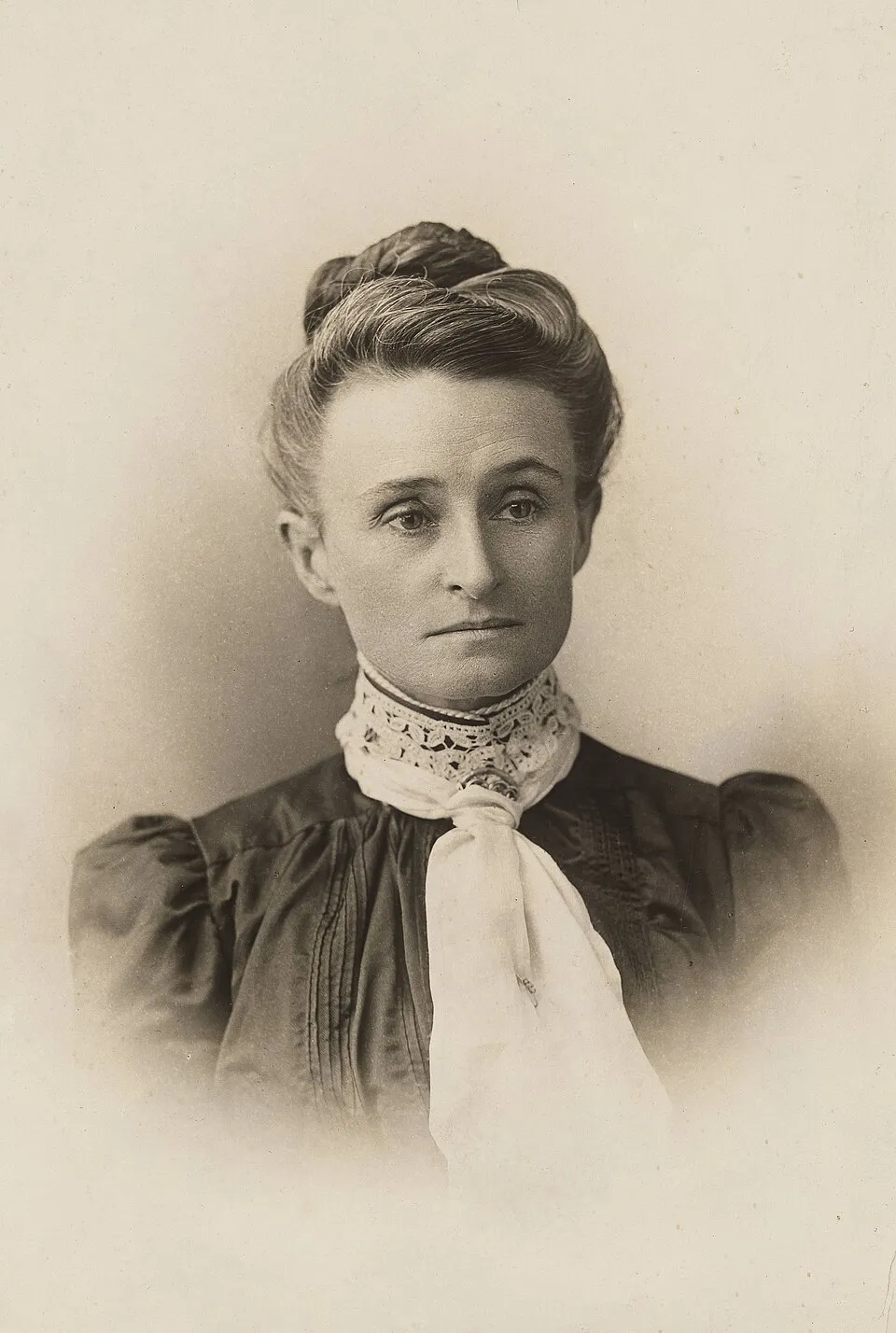
Edith Dircksey Cowan (born Edith Dircksey Brown) was born on the 2nd of August, 1861, at Glengarry Station near Geraldton. She moved to Perth at the age of 7 after her mother, Mary Wittenoom, died during childbirth, and she became an orphan after her father, Kenneth Brown, was hanged for the murder of her stepmother.
Over her lifetime, Cowan advocated for many things. One of her first forms of activism was during the women's suffrage movement, where Cowan became one of the founders of the Karrakatta Club, and was successful in granting women the right to vote in 1899 with the passage of the "Constitution Act Amendment Act 1899".
Cowan later turned to welfare issues, particularly in concern to women's health and the welfare of disadvantaged groups. Her advocacy led to the construction of the King Edward Memorial Hospital for Women in 1916, where she became a member of its advisory board upon its opening.
She also advocated for the welfare of children. Cowan believed that children should not be tried as adults, and so helped found the Children's Protection Society in 1906, which led to the 1907 establishment of the Children's Court of Western Australia. Cowan later became a justice of the Children's Court in 1915. She was later named a Justice of the Peace in 1920.
Cowan's biggest achievement came in 1921. Western Australia had passed the "Parliament (Qualification of Women) Act 1920", which allowed women in WA to contest for parliament. At the 1921 state election, only four women contested for parliament; those being Elizabeth Clapham (Labor, West Perth), Ada Bromham (Independent, Claremont), Nellie Martel (Independent, North Perth), and of course, Edith Cowan (Nationalist, West Perth). Out of those four, only Edith was elected to State Parliament, and ironically defeated Attorney-General Thomas Draper, who was the one to introduce the legislation that permitted her to stand.
She only lasted one term, being defeated in the 1924 election, and was unsuccessful in the 1927 election, but during her three-year term, Edith Cowan pushed through legislation that paved the way for women's rights, those of which are to allow women to be involved in the legal profession and to place mothers in an equal position in the event their children pass away without a will. She was also one of the first to promote sex education in schools.
Published: March 3rd, 2026
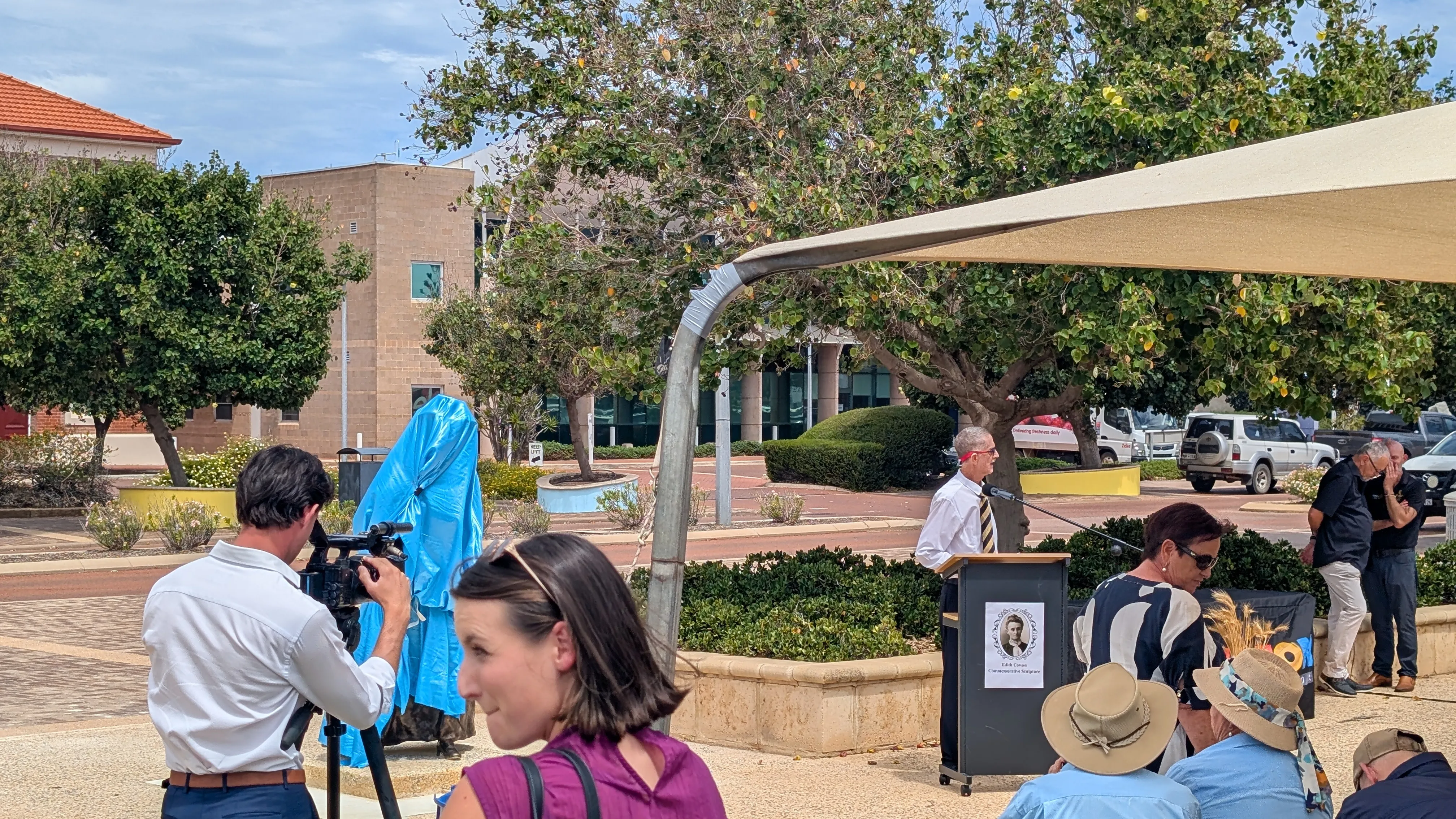
On February 25th, 2026, the City of Greater Geraldton launched the unveiling of the statue of Australia's first female politician, Edith Dircksey Cowan. It came after many months of delays in transportation, but nevertheless, Edith Cowan has now been further memorialised in her home.
If you are unsure who Edith Cowan is, let me tell you a brief story about her...